


Can Construction Trailers Meet OSHA Requirements for Jobsite Offices?
Construction trailers are appearing on many job sites, but do they actually comply with OSHA standards for site offices? Knowing OSHA rules is important; it keeps your team safe and productive. This article examines key OSHA rules, looks at the benefits and difficulties of using construction trailers, and shares tips to help you follow the regulations. Learn how these mobile offices can benefit you while keeping safety intact.
Overview of Construction Trailers
Construction trailers, also called portable offices, are movable buildings that can be changed to fit the requirements of a worksite.
These trailers support mobility with options like standard mobile classrooms for educational projects or custom site offices equipped with electrical safety features, heating, and air conditioning.
For example, a trailer can be arranged as a complete conference room during a big construction project, encouraging teamwork at the site.
Tools such as modular design improvements make it simple to increase or decrease size depending on project needs.
Restrooms and kitchens are included to provide basic hygiene facilities, which are important for extended projects. To understand the full range of options available, including financing and delivery, you can learn more about new construction office trailers.
Importance of OSHA Compliance
OSHA compliance is essential for keeping workers safe and healthy, as it sets the legal construction regulations that construction sites must follow.
Failure to adhere to OSHA regulations can lead to significant penalties. For example, a serious violation can incur fines up to $13,653 per violation, while repeat offenses can result in penalties as high as $136,532.
To illustrate, a construction site that neglects proper fall protection measures could face substantial fines and potentially face shutdowns, jeopardizing both worker safety and project timelines.
Prioritizing compliance helps keep your employees safe and prevents financial penalties for your business.
Understanding OSHA Requirements

Knowing OSHA rules is important for any construction project manager who wants to maintain a safe work environment.
General OSHA Regulations for Jobsite Offices
Jobsite offices must adhere to general OSHA regulations, which cover aspects like fire safety, electrical safety standards, and employee accommodations.
To keep safe from fires, make sure all emergency exits are easy to see and paths are clear. Place fire extinguishers in key spots. Practice fire drills often to help employees learn evacuation steps.
In terms of electrical installations, follow OSHA’s standards for grounded circuits and adequately cover exposed wiring to prevent shock hazards. It’s important to keep walkways and exits clear to improve safety during emergencies.
Having comfortable rest areas for employees helps improve their health, increases employee productivity, and meets OSHA requirements.
Specific Requirements for Temporary Structures
Temporary structures, such as construction trailers, must comply with additional OSHA requirements that address structural integrity, load capacity, and accessibility.
Start by ensuring that all temporary structures are engineered for specific loads they will bear, including rain and wind factors.
Perform load testing to check structural strength before using; testing should match real-life conditions.
Site accessibility is important, so add ramps or lifts as needed to meet regulations.
Monthly inspections should be scheduled to make sure everything meets the standards and to repair any damage.
Use equipment like load cells to get accurate weight readings and depend on checklists for routine inspections and verifications. For those setting up mobile office trailers, the process of site preparation and securing zoning permits is crucial; our instructional guide offers valuable insights on how to navigate these requirements.
Construction Trailers as Jobsite Offices
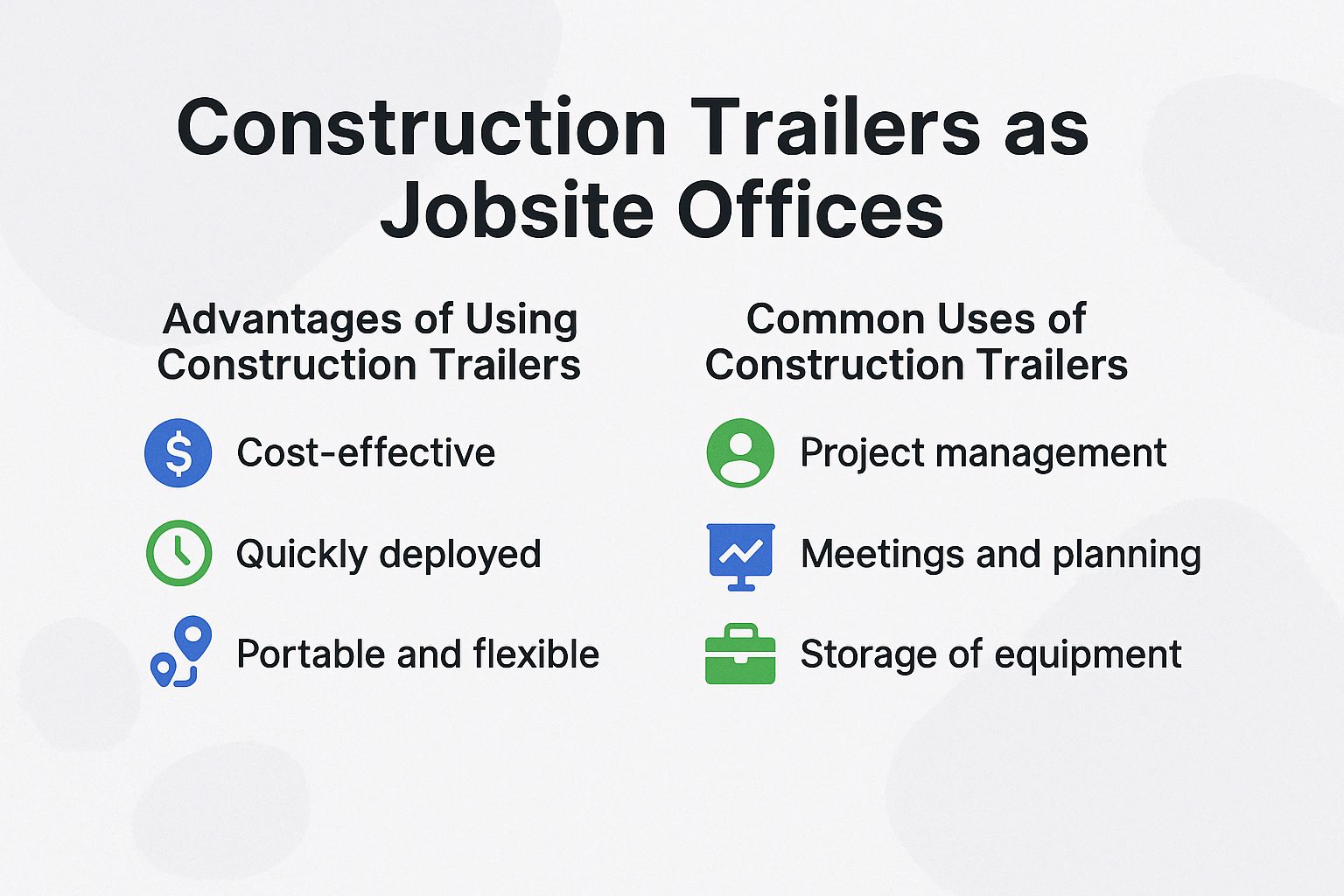
Construction trailers are more often used as mobile offices because they offer specific advantages that help work run smoothly and supply essential facilities. If you’re curious about what constitutes a portable office trailer, this overview provides comprehensive insights into their design and utility.
Advantages of Using Construction Trailers
Using construction trailers helps keep things organized, makes the site safer for workers, and allows for easy changes in how the site is set up.
Construction trailers offer specific areas for site tasks like meetings and rest breaks, improving communication and helping manage projects better.
For example, having a trailer as a central hub allows for quick strategy sessions without the need for lengthy site walks.
Trailers can be equipped with secure storage units for construction equipment and materials, reducing clutter and minimizing hazards.
Construction managers can use office trailers at the job site to handle changing project needs, making tasks easier and improving how work is done.
Common Uses of Construction Trailers
Common uses of construction trailers vary from on-site offices to storage spaces for equipment, providing essential amenities for construction teams.
For residential builds, trailers often serve as mobile offices where project managers can review plans and meet with clients conveniently, ensuring legal compliance.
On the other hand, big commercial places often use the trailers as break areas for employees. These trailers have bathrooms and small kitchens to make workers more comfortable.
Trailers can provide secure storage for costly machinery and tools, preventing theft and damage.
Companies like Portable Offices offer customizable trailer features to fit specific project needs, ensuring that teams have the support they require throughout the construction process.
Compliance Challenges
Even though construction trailers offer advantages, issues with meeting regulations can occur, especially concerning their strength and safety requirements.
Structural Integrity and Safety Standards
Ensuring structural integrity in construction trailers requires adherence to federal regulations concerning load capacity and weather resistance.
To follow safety rules, regularly carry out checks on important parts like the frame, flooring, and anchoring systems. Hire certified inspectors for complete assessments.
Maintain proper documentation of inspections and repairs, which can be facilitated by tools like SafetyCulture for tracking compliance audits.
Make sure your trailers can handle different weather conditions by using weather-resistant materials and quality assurance sealants to make them last longer.
Schedule a maintenance routine to check for any issues twice a year. This helps stop structural problems before they start, ensuring trailer certification.
Accessibility Requirements
OSHA requires construction trailers to have certain accessibility requirements that make them accessible for all workers, including those with disabilities.
To meet OSHA rules, make sure your construction trailers have ramps for entry, not stairs, with a slope no steeper than 1:12.
Include at least one accessible restroom with grab bars and adequate space for maneuverability.
Using adjustable workstations can accommodate various user heights and needs.
Implement clear safety signage with braille options to guide all employees effectively.
Regular safety training sessions can educate staff on accessibility practices, fostering an environment that includes everyone.
Evaluating these modifications will improve overall employee welfare and productivity.
Environmental Controls
Putting in environmental controls in construction trailers is key to making the work area safe and comfortable for everyone.
- To achieve this, start by ensuring proper ventilation; consider installing exhaust fans and air filters to reduce pollutants.
- Insulation is essential to regulate temperature and minimize energy costs; use materials like fiberglass or foam for effective thermal resistance as part of environmental controls.
- Place smoke alarms and fire extinguishers in key spots in the trailer for fire safety.
- Regularly inspect these systems to comply with safety regulations and protect workers, ensuring the workspace is secure and efficient.
Meeting OSHA Standards with Construction Trailers
Construction trailers must follow OSHA rules and be kept safe by following set safety instructions.
Design Considerations
Effective design considerations for construction trailers include space optimization, ergonomic considerations, and compliance with safety regulations.
Prioritize features like ample natural light and ventilation to create a comfortable environment. Design the interior with multi-functional furniture, such as foldable tables and stackable chairs, to maximize space.
Make sure all materials and designs follow local building rules, which usually include minimum sizes for areas and safety requirements. Consider safety features like non-slip flooring and secure storage for tools.
Using 3D modeling software can help visualize these elements and make adjustments before construction begins, resulting in a more efficient design process that meets state regulations.
Inspections and Maintenance
Regular inspections and maintenance of construction trailers are essential for ensuring compliance with OSHA standards and promoting a safe work environment in line with inspection protocols.
To create a good maintenance schedule, check everything closely every two weeks and do detailed reviews every three months.
Create a checklist that includes key inspection criteria:
- Checking for structural integrity
- Verifying fire extinguishers are up-to-date
- Ensuring electrical systems are functional
- Inspecting plumbing for leaks
For compliance, document these inspections and any repairs made. Use tools like SafetyAudit Pro to track inspections and issues, which helps maintain records needed for compliance audits.
By following these steps, you can improve safety and meet regulatory compliance standards successfully.
Case Studies
Looking at examples of projects that followed the rules gives useful information on how to use construction trailers that comply with OSHA requirements.
Successful Implementation of Trailer Usage and Design
One notable case is a large construction management firm that implemented a fleet of trailers for a major project, achieving 100% OSHA requirements and worksite compliance with innovative design.
To comply with regulations, the company used trailers that include safety gear and site facilities such as emergency exits, fire extinguishers, and first-aid kits.
They used the SafetyCulture app to carry out daily inspections and check for dangers, noting issues as they occurred. OSHA compliance training sessions were held, emphasizing proper trailer usage and safety protocols.
As a result, they followed the rules and saw a 20% rise in productivity, thanks to better worker protection, morale, and site safety awareness. This complete method changed how they work, setting performance standards for others in the construction industry.
Common Pitfalls and Solutions
Identifying common pitfalls in the trailer usage and construction workflow can help companies devise effective solutions to maintain worksite compliance with OSHA standards.
One prevalent issue is inadequate space for storing tools and materials, leading to site organization challenges and safety hazards. Companies can address this issue by using modular trailers with shelves that can be adjusted, such as those from BTM Manufacturing, to make better use of space and meet zoning laws.
Another challenge is insufficient power supply for equipment. Installing solar panels, as seen in the mobile workspaces from Alterra, can provide sustainable energy, ensuring tools are always operational and promoting efficient construction logistics.
Regular training on correct trailer use and risk management also reduces risks, creating a safer work environment and improving workforce safety.
Best Practices for Compliance
Following recommended guidelines can greatly improve construction safety culture and productivity of trailers on job sites.
Regular Training for Staff
Regular training sessions for staff on OSHA rules and site safety can greatly lower workplace accidents and improve compliance with labor standards.
To implement an effective training program, hold sessions quarterly, ensuring topics such as hazard recognition, emergency procedures, proper equipment handling, and health regulations are covered.
Engage staff through interactive methods like hands-on demonstrations and real-life scenario discussions to improve workforce engagement.
Resources like SafetySkills and OSHA’s Training Institute offer helpful materials and online courses for people of different skill levels.
Gathering comments after each session helps improve upcoming training and creates a space where employees feel informed and confident about safety practices and employee rights.
Documentation and Record-Keeping
Good documentation and record-keeping are essential to show compliance with building codes, insurance requirements, and OSHA rules during inspections and checks.
To meet the rules, keep these important documents:
- Injury and Illness Incident Reports (OSHA Form 300), which track workplace injuries and aid in health and safety audits;
- OSHA 301 forms detailing individual incidents for risk assessment;
- Safety Data Sheets (SDS) for hazardous materials, ensuring compliance with trailer maintenance standards; and
- Training records documenting employee safety training sessions and contractor responsibilities.
Regularly reviewing these records can identify gaps in safety procedures and site rules, improving workplace safety. Tools like SafetyPro or iAuditor help make the record-keeping process simpler by keeping all necessary documents easy to find and neatly arranged.
Future Directions for Construction Trailers and Meeting Legal Standards
Construction trailers are changing to align with new rules and legal requirements. Understanding these changes is key to staying compliant.
- Safety Rules: New safety guidelines require trailers to have updated features to ensure worker protection on-site.
- Environmental Guidelines: Trailers now need to adhere to stricter environmental rules to minimize their impact on the environment.
- Use of Technology: Modern trailers are adopting new technologies to improve efficiency and management.
- Energy Use: There’s a focus on making trailers more energy-efficient to save costs and reduce environmental harm. Keeping pace with these changes will help companies remain compliant and competitive in the construction field.
The upcoming plans for construction trailers include improvements to meet regulations, such as site planning and using modern technology and flexible designs.
Intelligent trailers use internet-connected sensors to continuously monitor equipment and verify compliance with safety regulations, supporting construction oversight and adherence to legal requirements. For example, with a platform like SmartTrailers, managers can monitor the condition of their trailers remotely and receive alerts if the equipment fails or if there is unauthorized access.
Modular designs allow for easy reconfiguration to suit diverse project needs, improving efficiency and accommodating trailer-based temporary office setup. Tools like Autodesk’s BIM 360 help with design planning, making sure modular units follow local rules and improve on-site work.
Final Thoughts
Knowing and following OSHA rules for construction trailers is important for maintaining site leadership and keeping a job site safe and effective.
- To follow the rules, begin by checking your trailer setup against OSHA standards and construction practices.
- Implement safety measures, such as providing adequate fire extinguishers, ensuring proper ventilation, maintaining clear access routes, and verifying site amenities.
Frequently perform safety checks using tools such as the OSHA Safety Checklist App to monitor. Teaching your team these rules increases safety and lowers risk, ensuring compliance with workplace policies.
Stay updated with changes to OSHA guidelines to significantly improve safety and the work environment at your site. Prioritize ongoing education, functionality, and compliance checks as part of your operational routine.

About the Author
I’m Ethan Caldwell, a University of Colorado graduate with a degree in Environmental Engineering and the owner of a modular office company based in Oregon. For over 11 years, I’ve helped businesses across the Pacific Northwest and beyond implement smart, sustainable, and high-performance storage and workspace solutions. As an editor for Mobile Office Deals, I specialize in helping people make the right call when it comes to modular infrastructure.