

The Cost and Convenience of Adding Electricity to Your Mobile Office Trailer
Imagine turning your mobile office trailer into a fully functional workspace with convenient access to electricity. Running your trailer is necessary for both work efficiency and comfort. Grasping the financial effects and energy use involves setup expenses, regular utility bills, and various electrical systems. Find out about portable power sources and how choosing energy-efficient solutions can make your work life better and help manage costs. Curious how to make it all work? Let’s explore!
The Importance of Electricity in Mobile Office Trailers and Modular Offices
Electricity is important for mobile office trailers. It makes them work better and offers necessary features that help people do their jobs while moving. If you’re interested in understanding the best features these offices can include, check out our guide on the Top 10 Mobile Office Features in 2023.
Benefits of Electrical Power
Electricity increases efficiency by enabling the use of important office tools like computers, lights, and air conditioning, which in turn increases work output.
In mobile offices, reliable electricity and other trailer amenities let workers use laptops, printers, and Wi-Fi routers without problems.
Research indicates that air conditioning can lead to a 20% increase in productivity, as comfortable environments keep employees focused and alert.
Access to power and temporary power solutions allows for continuous connectivity, facilitating seamless communication via video calls or collaborative tools.
To get the best results, think about using a portable generator or solar panels to keep a consistent power supply, improving work output and employee comfort.
Common Uses of Electricity in Mobile Offices and Travel Trailers
Mobile offices use electricity to run important devices such as computers and printers, as well as other appliances like coffee makers.
Mobile offices frequently rely on electricity and power management systems for effective communication tools. This includes Wi-Fi routers for internet connectivity and phone chargers to keep devices powered.
For on-the-go heating or cooling, portable power options like portable fans or space heaters can be used, ensuring comfort regardless of the weather. It’s important to have a reliable power source, like a generator or a strong battery system, to keep things running during remote projects or in places with unreliable electricity.
Investing in an uninterruptible power supply (UPS) can prevent unexpected shutdowns and data loss.
Learning About the Expenses of Installing Electricity
Knowing the costs of installing electricity in a mobile office trailer is important for budgeting correctly and planning the project effectively. Additionally, understanding the broader financial implications, such as how much owning a mobile office truly costs, can provide valuable insights for comprehensive project planning.
Initial Setup Costs
The initial setup costs for electricity in mobile office trailers can range from $1,500 to $5,000 depending on the system and installation requirements.
To create a budget-friendly setup, consider a small solar panel solution alongside a portable generator.
For example, a basic 100-watt solar kit might cost around $300, perfect for powering lights and small devices. Add a budget generator for approximately $500, ensuring backup energy when sunlight is low.
Include wiring and permits, which can total another $200-$500. By combining these tools, you can achieve an efficient setup for under $1,500, especially if you handle installation yourself.
This strategy reduces expenses and offers renewable energy choices.
Ongoing Utility Costs and Energy Monitoring
Ongoing utility costs for mobile office trailers can average between $100 to $300 monthly, depending on usage patterns and energy sources.
To manage these costs effectively, consider implementing energy-efficient appliances, which can significantly reduce electricity consumption.
For example, using LED lighting instead of traditional bulbs can cut lighting costs by up to 75%. Installing a power management system allows for better monitoring and control of power usage, further driving down expenses.
If possible, transitioning to solar energy, an energy alternative, can offer long-term savings, especially if utility rates continue to rise. This method reduces monthly expenses and supports environmental health.
Cost Analysis: Mobile Office vs. Traditional Office
Comparing costs between mobile offices and traditional offices reveals significant savings, often up to 30% in overheads when factoring in utility and rent costs.
For instance, a traditional office located in downtown may incur monthly rent of $3,000 and utilities averaging $400. In contrast, a mobile office setup could cost around $1,500 for rent and $200 for utilities.
Mobile offices reduce maintenance expenses, which can total another $300 monthly in traditional spaces. The biggest savings come from reduced fixed expenses and greater flexibility.
Businesses like Tech Innovations, which transitioned to a mobile model, reported annual savings exceeding $20,000 while enhancing employee productivity and satisfaction, improving financial planning.
Types of Electrical Systems for Mobile Trailers
Various electrical setups can be used in mobile trailers, each offering specific benefits and factors for efficient use and cost savings.
Solar Power Systems and Energy Independence
Solar power systems can provide sustainable energy for mobile office trailers, with installation costs ranging from $3,000 to $10,000 based on system size.
A typical solar power system includes photovoltaic panels, inverters, and batteries. Panels change sunlight into electricity, while inverters change this direct current into alternating current for office devices.
Batteries store excess energy for use during non-sunny periods. Setting up can be tricky. Handling tasks on your own may cut costs, but getting experts can make sure everything works as it should.
For example, a mobile office outfitted with a 6kW solar system powered by 20 panels and four batteries has successfully operated independently off-the-grid, showcasing the versatility of solar energy.
Generator Options
Generators are a popular choice for mobile offices, with costs typically ranging from $500 to $3,000 depending on capacity and fuel type.
Picking the right generator and determining your power needs means knowing the pros and cons of each type of fuel.
- Gas generators are widely available and easy to refuel, but they can be noisy and may require more frequent maintenance.
- Diesel generators offer greater efficiency and longer runtimes, ideal for extended field work, yet they come with a higher initial cost.
- Propane generators are cleaner and quieter but may have limited power output.
For optimal performance, assess your power needs and operating conditions to select the best fit for your mobile office.
Grid Connection Considerations and Utility Connections
Connecting a mobile office to the local grid requires specific infrastructure and permits, impacting both time and cost of setup.
- Start by looking into local rules about electrical connections to follow them correctly.
- Obtain any necessary permits, which may include site inspections and environmental assessments.
- Next, identify the correct equipment, such as a power inverter or transfer switch, which must meet local codes.
- Remember to hire a licensed electrician to help with installation and to meet safety standards.
By following these steps, you can make the process more efficient, ensuring compliance with permit regulations, and prevent possible delays due to regulatory mistakes.
Installation Process for Electrical Systems
Setting up electrical systems in mobile office trailers requires key steps and factors, including electrical safety standards, to make sure they are safe and work properly. For an extensive analysis of this process, our comprehensive guide on mobile office trailer setup covers important details such as zoning, permits, and site preparation.
Hiring Professionals vs. DIY Electrical Installation
Choosing between hiring professionals or tackling a DIY electrical installation for a mobile office can significantly impact costs and safety.
When considering a DIY approach, assess your skills and the complexity of the electrical work, including potential labor costs.
For simple tasks, such as installing LED lighting or adding outlets, you might only need basic tools like a multimeter, wire strippers, and a voltage tester.
For complicated installations, employing an experienced electrician guarantees following safety standards and can prevent costly mistakes. For instance, improper wiring could lead to blown fuses or even fires, highlighting the importance of thorough research.
Weigh the cost savings of DIY-potentially 30% lower-against the risks involved.
Permitting and Regulations for Electrical Systems
Handling permits and rules is necessary to legally install electrical systems in mobile office trailers, and usually involves local inspections.
First, identify the permitting requirements specific to your region, as these can vary significantly. For instance, some areas may mandate electrical inspections from a licensed contractor, while others might simply require a self-certification.
Common regulations typically include adherence to the National Electrical Code (NEC) and local safety codes. Gather essential documents such as site plans, load calculations, and proof of compliance with zoning laws.
A checklist can make this process easier:
- Site plans
- Load calculations
- Electrical contractor’s license
- Proof of zoning compliance
Following these steps helps make the permitting process easy.
Convenience Factors and Energy Solutions of Electricity in Mobile Offices
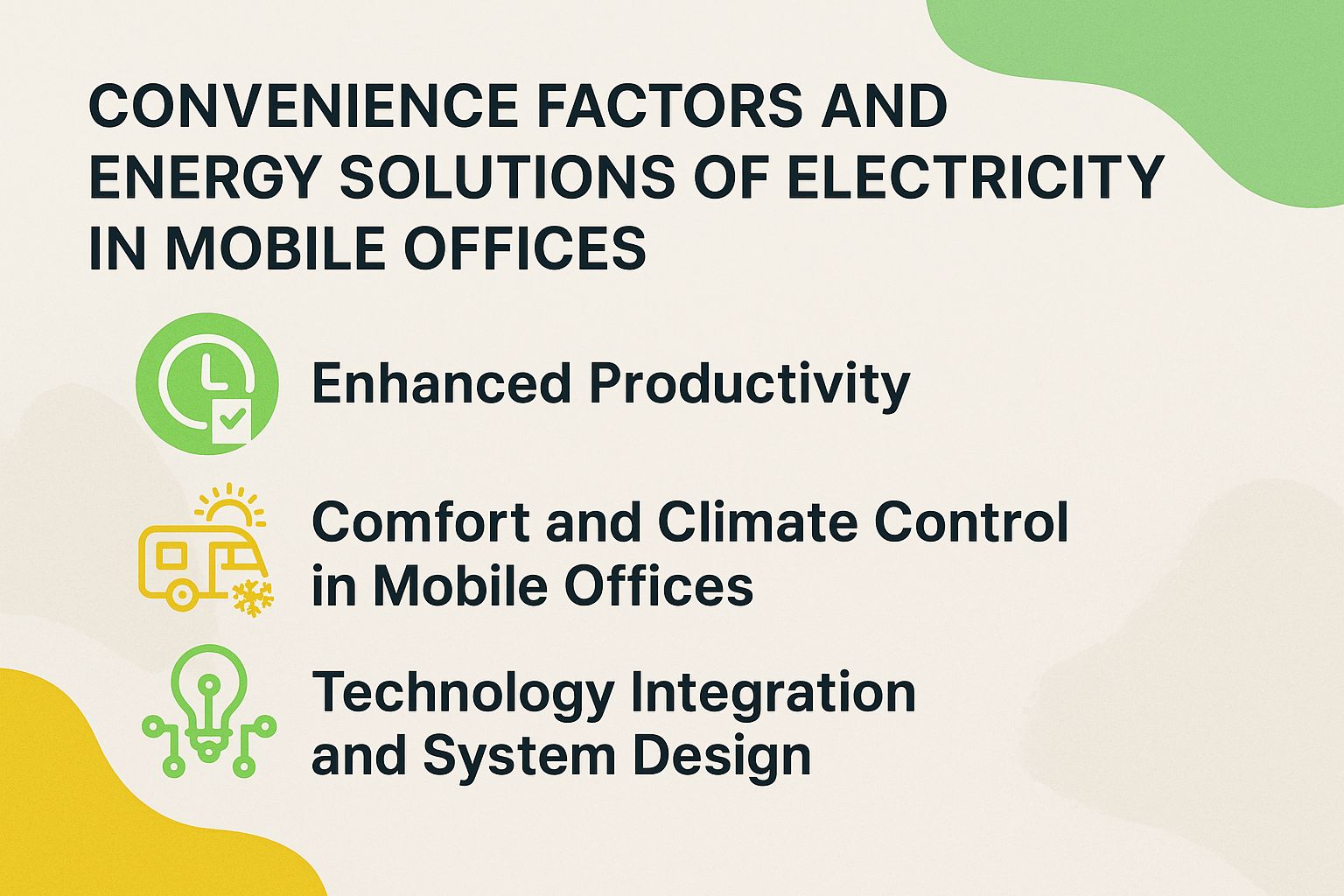
Reliable power in mobile offices makes working from these locations more comfortable and productive.
Enhanced Productivity
Access to electricity in mobile offices typically increases productivity levels by providing reliable power for necessary tools and technology.
For instance, a construction firm saw a 25% output increase after powering their tools with generators, enabling seamless communication and real-time project management.
Using portable power solutions like the Jackery Explorer series allowed teams to charge devices directly on location, simplifying digital collaboration. Incorporating energy efficiency measures and battery backup options, using battery banks for laptops kept work going smoothly without any breaks, especially during power outages.
By investing in energy options, businesses can make their operations better, make tasks easier, and work more smoothly in various environments, while considering energy evaluations and how well they fit with current systems.
Comfort and Climate Control in Mobile Offices
Having electricity in portable workspaces enables the use of heating and cooling systems, which enhances comfort by considering weather conditions and boosts focus and productivity.
Studies indicate that keeping temperatures controlled can increase employee satisfaction by up to 25%. Devices like thermostats (such as Nest or Ecobee) allow you to set exact temperatures, keeping your space comfortable.
Portable air conditioners or electric heaters can meet different needs in shared spaces, promoting overall harmony. Using air purifiers improves air quality, which positively affects health and work efficiency.
By focusing on maintaining a constant temperature, mobile offices can improve the workspace, positively affecting both mood and productivity.
Technology Integration and System Design
The integration of technology in mobile offices relies heavily on electrical systems to power communication and productivity tools.
For productive work, think about buying a big portable power station such as the Jackery Explorer 1000. It can power multiple devices at the same time, supporting off-grid capabilities and mobile infrastructure. Pair this with a reliable mobile hotspot like the Verizon Jetpack for consistent internet access.
Use collaboration tools such as Zoom for video conferencing and Trello for project management. This mix, with user experience improvements, helps you stay connected and organized, making your work more efficient while traveling.
Many mobile professionals find that setting up their system properly takes about an hour, leading to seamless operation thereafter.
Maintenance and Safety Considerations for Mobile Offices

Regular maintenance and safety checks are important to keep electrical systems in mobile offices working well and safe. For those setting up mobile offices, ensuring compliance with zoning and safety regulations is crucial. Explore our detailed guide on mobile office trailer setup, zoning, permits, and site preparation to understand the full scope.
Regular Inspections
Regularly checking electrical systems, including electrical outlets and ensuring compatibility, can help avoid major problems and meet safety rules.
To effectively carry out these inspections, create a checklist that includes the following key elements:
- Check wiring for wear or damage
- Test outlets for proper voltage
- Inspect circuit breakers for tripping issues
- Examine grounding systems for integrity
Schedule these inspections quarterly to align with safety protocols and local regulations, considering performance metrics and system capacity. Using tools like a multimeter to check voltage and a camera to see into difficult spots can make your inspection process more complete and quicker.
Safety Protocols
Making safety rules helps stop electrical dangers in mobile offices and keeps the workspace safe for everyone.
To improve electrical safety, think about using surge protectors to prevent voltage spikes and holding regular safety drills to get employees ready for emergencies, ensuring service quality and minimizing risks.
Incorporating training sessions on identifying electrical hazards can also significantly reduce incident risks. According to the Electrical Safety Foundation International, mobile setups experience 20% of electrical incidents, often due to improper safety practices.
Regular inspections of all electrical equipment, combined with proper labeling of wires and outlets, can further minimize these risks and create a safer workspace.
Choosing the Right Mobile Office Configuration
To make an informed decision regarding electrical setups, assess both initial and ongoing costs against productivity and comfort benefits.
Begin by figuring out the initial costs, including items like programmable thermostats or appliances that use less energy, plus the costs to set them up. Consider commercial usage and leasing options. For example, a thermostat with advanced features might cost between $100 and $250.
Next, estimate ongoing expenses such as electricity bills-monitoring these can reveal potential savings. Consider tools like EnergyHub or Sense to track energy consumption in real-time, helping identify usage patterns.
Consider the benefits over time, like better temperature management or less noise, to make sure your choice fits your budget and way of living. Compare energy companies’ options and potential money savings.
Upcoming Directions in Mobile Office Power and New Energy Sources
New developments in mobile office power, such as the growing use of solar and renewable energy, are influencing how mobile workspaces are developed, with a focus on environmental impact and energy supply.
Innovative companies are at the forefront of these developments. For example, Tesla’s solar products, such as solar roofs and their Powerwall battery system, change how mobile offices use and save energy, impacting site logistics and service providers.
Goal Zero offers portable solar panels and battery packs, enabling professionals to recharge devices on-the-go. These improvements make energy use more efficient and help support sustainable methods.
As more businesses use these technologies, expect significant changes in how mobile work environments function, focusing on being environmentally friendly and self-sufficient in energy, and addressing market trends and construction timelines.
Final Thoughts on Mobile Office Power Infrastructure
Knowing the details of electricity use in mobile offices, including power distribution and site preparation, can help make better choices and improve workspaces.
For example, you should carefully assess your power requirements, taking system design and energy needs into account. Start by calculating the wattage of devices you’ll use, like laptops and printers, then choose a suitable power inverter.
Using solar panels can make a big difference because they collect energy from the sun, ensuring we can keep using it for a long time. Tools like the Goal Zero Yeti 400, with a capacity of 400Wh, can power multiple devices for hours.
Consider portability and weight, particularly if your workspace varies, and the availability of equipment rental options. These steps can create a more effective and eco-friendly mobile office setup, factoring in utility provider considerations.

About the Author
I’m Ethan Caldwell, a University of Colorado graduate with a degree in Environmental Engineering and the owner of a modular office company based in Oregon. For over 11 years, I’ve helped businesses across the Pacific Northwest and beyond implement smart, sustainable, and high-performance storage and workspace solutions. As an editor for Mobile Office Deals, I specialize in helping people make the right call when it comes to modular infrastructure.